Author: Mollie Bloudoff-Indelicato

I did extensive research on Spanish classes when I first moved to Lima. I read reviews; I compared prices; I talked to friends, and I sat in on classes.
Since I was on reporting trips every other week and learning a lot on the road, I didn’t end up taking a class. BUT, perhaps you can benefit from my many hours of research:
ICPNA
A friend of mine swears by these classes. He’s says they’re quick, informative and, most importantly, effective. He’s been going for about a year now, I believe, and loves it. This one ended up being way too far away from my house to consider as an option, but check it out!
Hispana Spanish Language School
I would highly recommend Hispana Spanish Language School. The staff were very efficient, helpful and approachable. The professor was a woman from Cusco, and the lesson plan doubled as a Peruvian culture course. We learned learned about politics, Lima’s landmarks and foods. The curriculum was tough—there were often words I didn’t understand—but it’s a friendly atmosphere, and the professor welcomed my questions. I learned quite a bit from just one class, and, if I’d had time, I would’ve signed up for courses here.
ECELA Spanish
This school is more expensive than the others I looked at. They also expected me to pay in U.S. dollars, which is a bad deal 1. Because I need U.S. dollars to travel 2. Because the exchange rate is forever growing in North America’s favor. However, their customer service is amazing. They got back to me very quickly and answered all my questions, which often doesn’t happen here. And, if you sign up for their mailing list, they frequently offer discounts.
El Sol
A friend recommended this organization, but I didn’t have a good experience with the staff. They weren’t friendly or helpful, and they insisted on placing me in a Beginner class. When I explained (in Spanish) that I know numbers, colors, verbs, etc., they didn’t listen. So I sat in on a class and wasn’t impressed by their teaching style. The class itself wasn’t very structured, and I felt like the professor (a very nice individual!) took things too slowly, wasting time. I could’ve bumped myself up a level and taken classes in Intermediate, but meh.
In summary: I’d recommend going with Hispana or ICPNA. Enjoy!
Categories
Staying Safe in Peru
Safety is a problem here, and it isn’t. As long as you’re hyperaware and don’t make silly mistakes, you should be fine. Here are some tips on staying safe in Peru:
- Have you taken a basic self-defense class? This isn’t Lima-specific. You can use those tips to get out of bad situations in your own neighborhood. Check out the options available in your city, and sign up! It’s incredibly helpful and empowering.
- It’s common to get robbed here. I rarely carry a purse. I invested in a lot of lovely sports bras and keep my money there. I could still get robbed, of course, but I feel like I’m less of a target. The Significant Other uses a money belt.
- Leave your passport in the hotel/hostel and take a copy of your passport with you. You’re more likely to get robbed on the street than in a hotel, where a bad review on TripAdvisor could bring down business. NOTE: Hostels generally have lockers so bring your own lock!
- If you have a lot of expensive camera equipment, I’d recommend getting insurance for it. In Miraflores, you’re safer, but be very careful with your camera equipment in downtown Lima. Exercise common sense and:
- Don’t leave your purse/camera on the back of your chair or under your chair. Always keep everything important to you on your lap, with the strap wrapped around your wrist.
- Don’t walk around alone with equipment. Always have a partner/group.
- Get a camera case that doesn’t look like a camera case.
- Put your camera away unless you’re actively using it.
- Keep the camera strap securely around your wrist at all times.
- Keep the camera close to your body.
- If you’re in an unfamiliar area, try not to speak English. It instantly makes you more of a target.
- Don’t walk around at night alone.
- If you’re here for a while, buy a Peruvian SIM card from Claro or Movistar, the local cell providers. If not, use free wifi. Then download the app EasyTaxi. It’ll let you call safe taxis. They’re slightly more expensive, but always worth it. I rarely take taxis off the street. People get robbed quite frequently. [Significant Other adds: EasyTaxi also offers a price guide, so you can keep your driver honest.]
- Taxis will try to stiff you. Count your change before leaving. Ask how much it costs before getting in. For off-the-street cabs, a ride shouldn’t cost more than 15 soles to downtown. For EasyTaxi, it shouldn’t cost more than 20. If you’re getting around within Miraflores, it’ll be 10 soles. Check the price guide for the current rates.
- When going out drinking, be overly cautious. It’s conceivable that the bar tender will slip you something—even if you’re in a large group. And this warning doesn’t just apply to young women. Everyone is a target. Stick to bars that are recommended and in nicer areas of town.
- Don’t drink the water. I use it to brush my teeth, but I wouldn’t recommend it if you’re new to the country.
- Don’t eat fruits without washing them in a cleaning solution. Also don’t eat any uncooked vegetables, especially salads, unless you’re at a nice place. I got food poisoning my first week here because I ate a salad at a fast food restaurant.
- Don’t wear flashy jewelry (or any jewelry!).
- Be aware that stores open late most days and very few things are open on Sundays. Don’t leave any necessary purchases to the morning or the weekend.
- Everyone says this, but it’s worth repeating… If you’re getting robbed, give them your stuff. Your stuff is replaceable—you aren’t!
With the exception of food poisoning, I’ve never had a problem! But it pays to be vigilant so keep an eye out. =)
Categories
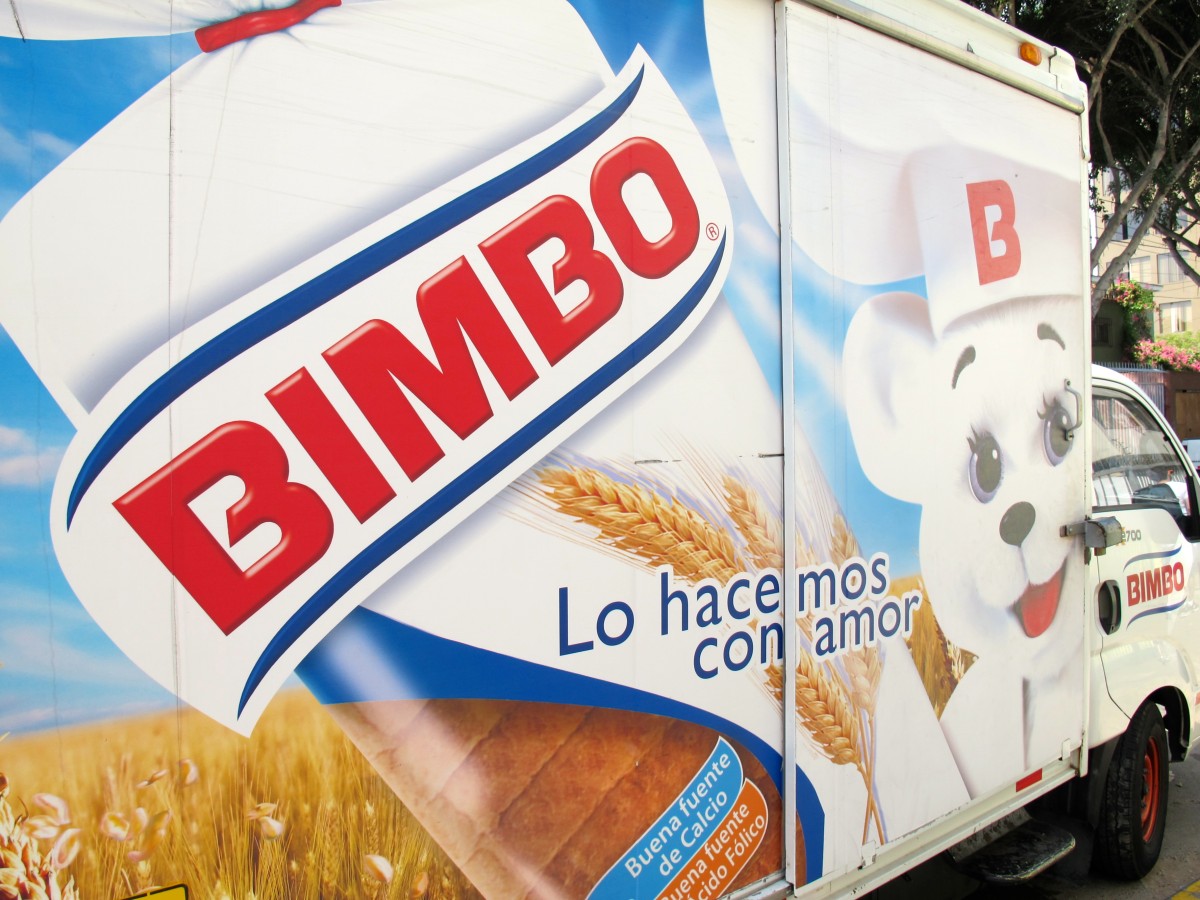
Unfortunate Branding
Categories
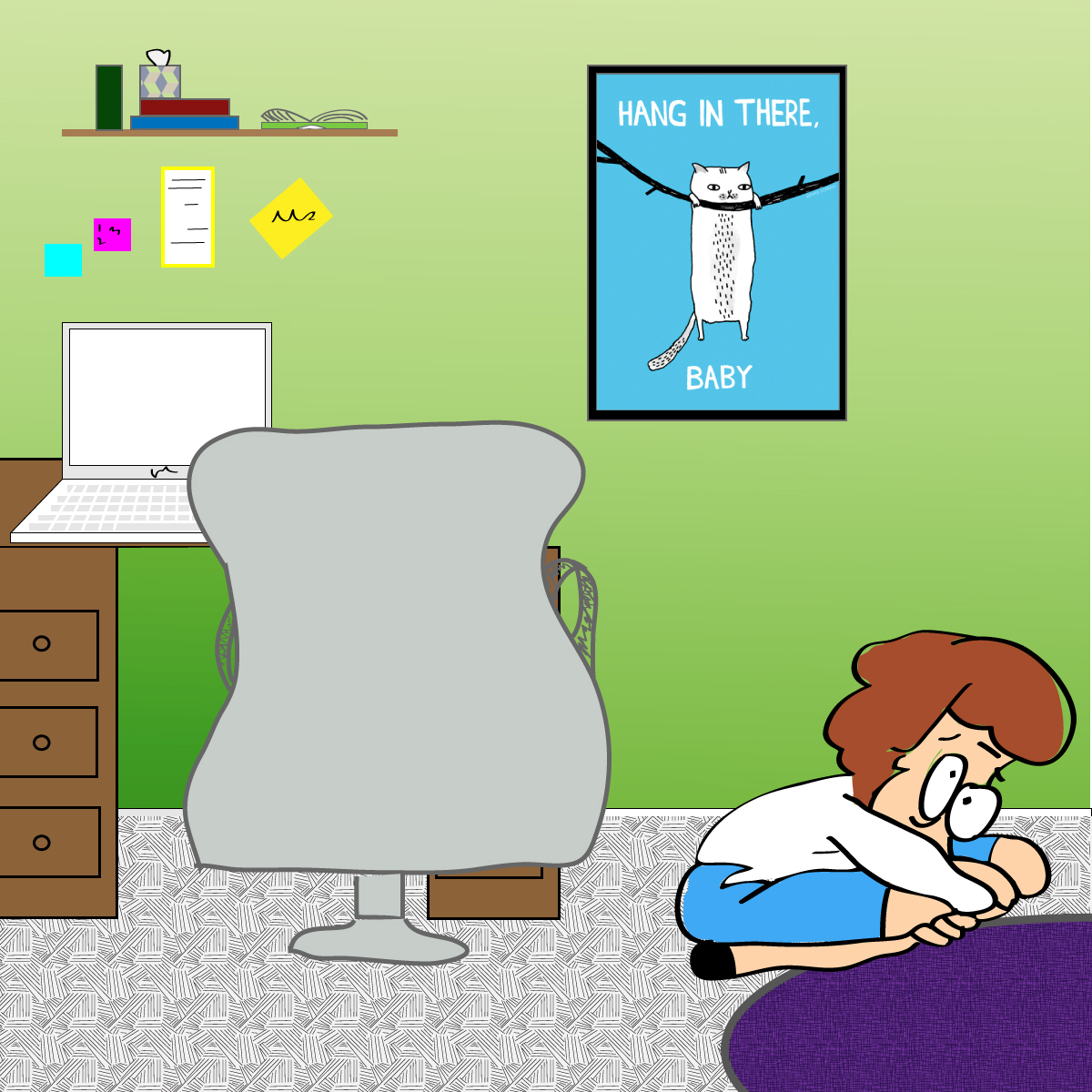
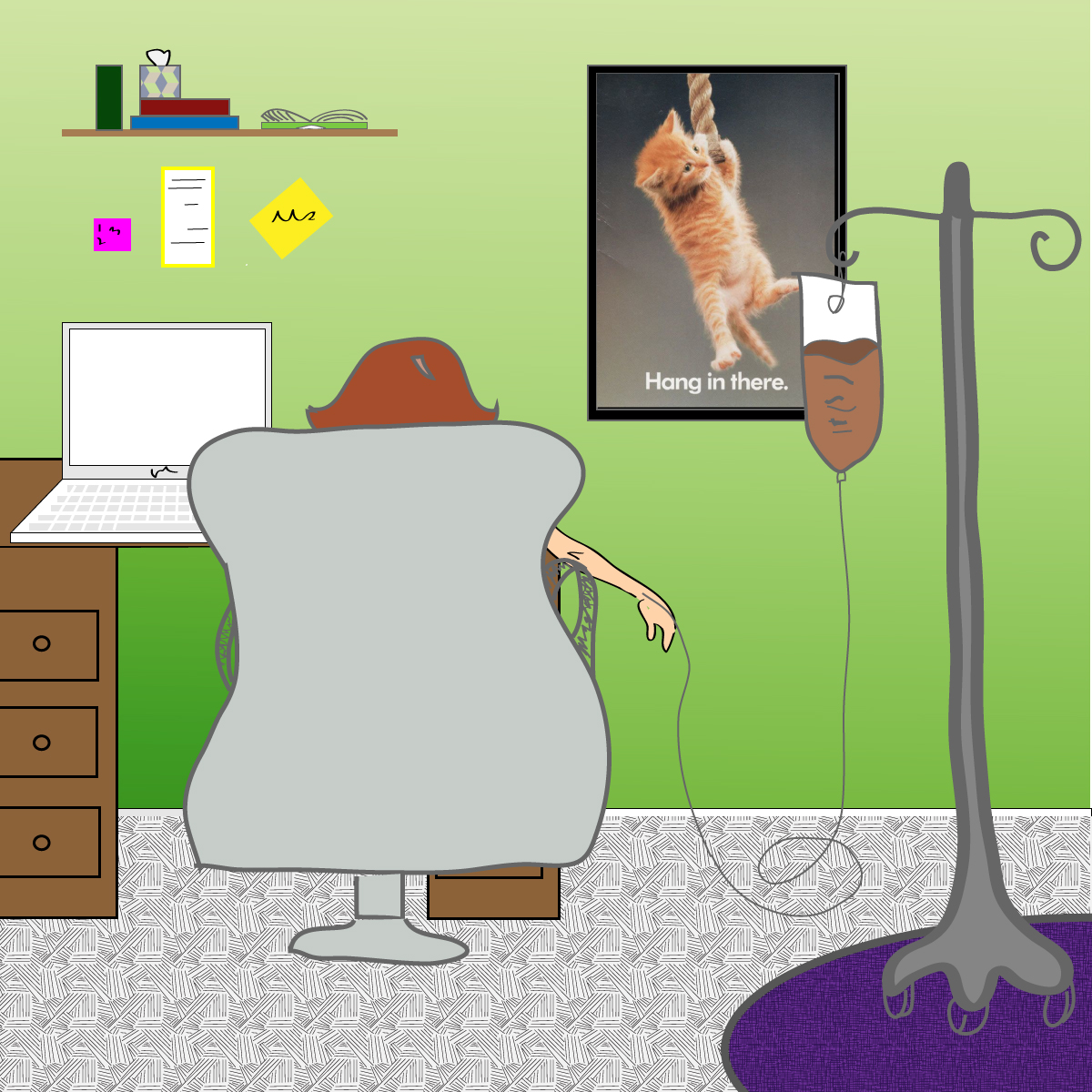
I’m Leaning In

Me: how do you check in on a job?
Significant Other: how?
Me: yeah, like what do you say?
Significant Other: say “hey, i just wanted to check in regarding the science writer position. i’m glad to answer any other questions”
Me: or I could photoshop a picture of me riding a dragon
SO: ha
Me: because I think someone who could ride a dragon would be a great hire
SO: that, too. couldn’t hurt #psdSkillz
Me: wait, are you seriously telling me to do this? because I think yes
SO: go for it
Me: today just got better
NOTE: OK, so the dragon photo didn’t happen… BECAUSE LIFTING A CAR WITH MY MIND POWERS IS SO MUCH COOLER!
Don’t rely on your hostel/hotel’s transportation! They’ll overcharge you, and getting a taxi at the airport is simple.
Take Green Taxi from the airport to your destination. It’s 50 soles (Peruvian currency) or $20.
Fifty soles is the better deal. You can exchange some money at the airport, and then exchange money on the street later where you’ll get a MUCH better rate. (NOTE: Most people on the route to Machu Picchu accept cash only!)
To get back to the airport, use a service called EasyTaxi. Download it to your phone, type in your location, and a safe cab will pick you up within 5 minutes. Getting around Lima shouldn’t cost you more than 20 soles (~$6). The app even tells you how much the fares are beforehand so there’s not confusion, bargaining or cheating!
The app gives you the option to connect your credit card, but just pay in soles for everything. Also note that cabbies rarely have exact change so try and carry as many coins as possible.
You can also use EasyTaxi to get around Lima and Cusco. You should avoid using local cabs because it’s oh-so common to get robbed in a cab.
Categories
How to Get to Inca Temple Ruins, Puno
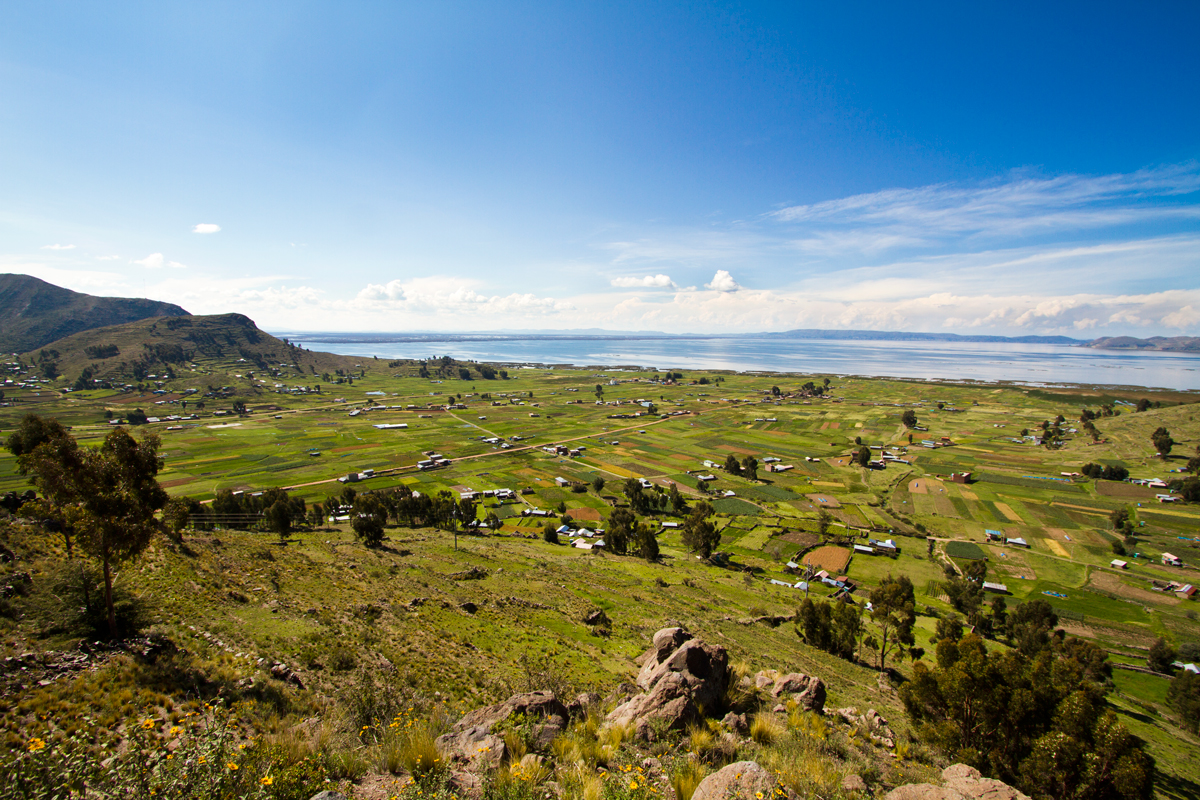
Lake Titicaca in Puno is a must-see Peruvian attraction, but it’s definitely a tourist trap.
For those who want to get off the beaten path for a few hours, this Inca temple is on my Top 10 Things to Do in Puno list. It’s a fantastic, short (45 min) hike. The view is spectacular; the temple has several “rooms” to explore, and (my favorite) you won’t see another tourist for miles.
Lonely Planet has a blurb on how to get there, but they have you climb up the back of the mountain, which is very challenging. After exploring a bit, the Significant Other and I came up with a (we think) much easier route.
Here’s how to get to the Inka temple ruins outside of Puno:
Categories
Inka Burial Tomb, Coporaque
I hope Pachamama likes peanut butter and jelly sandwiches.
It’s tradition to give the first sip of an alcoholic beverage to Pachamama, the Peruvian version of Mother Earth. Lacking anything more fermented than peach jelly left out in the sun, I dropped a piece of crust into a patch of flowers. If Madre Tierra didn’t appreciate it, the beetles might’ve.
Locals told us it would take about half an hour to climb from the town of Coporaque, Peru to Yuraq-Qaqa, the Incan burial tombs. That, of course, meant it took us a full hour. Altitude is a bitch.
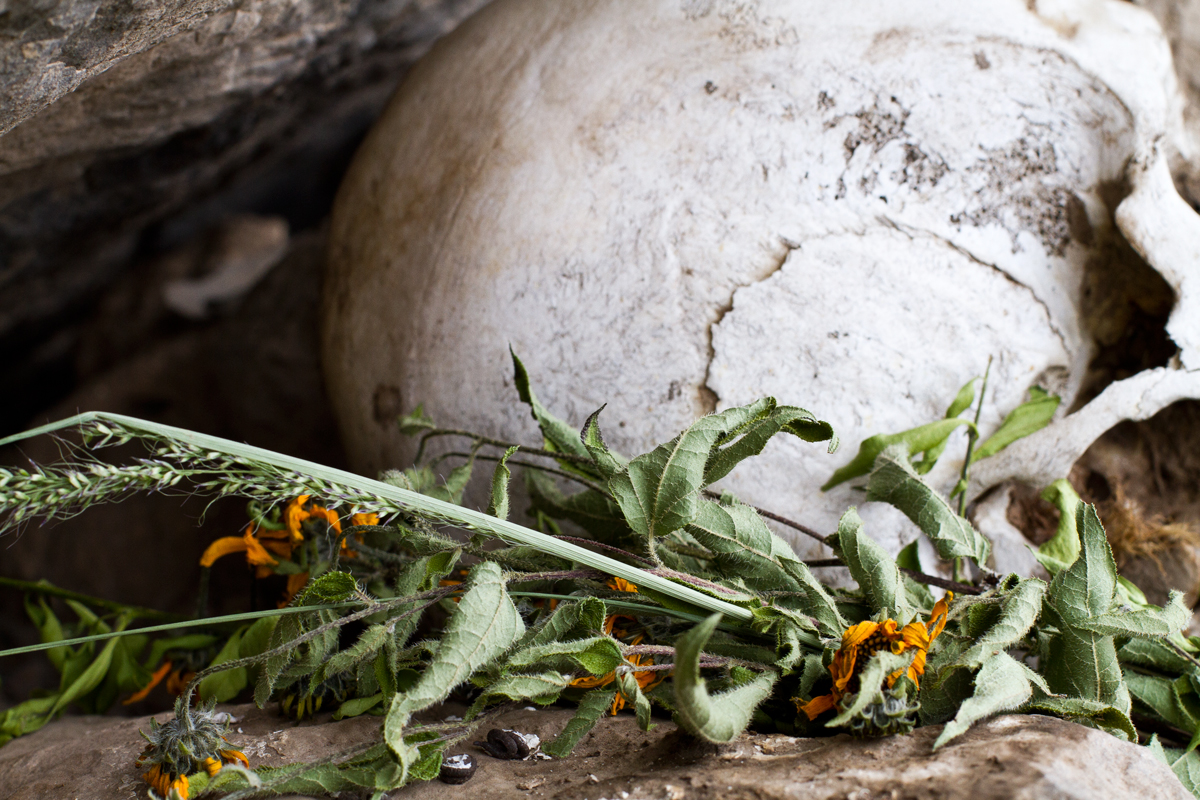
Though we didn’t see anyone else on the trail, the tombs are highly trafficked. Coca leaves and Peruvian coins litter haphazard piles of vertebrae, splintered jaw bones and dirty swatches of burial cloth.
In the U.S., I don’t believe in spirits, but in Peru, I’m firmly convinced they exist. So I was more than a little nervous to scale the burial towers. Exploring tomb after tomb took me farther and farther into the underbrush bearding the steep side of the mountain—perfect hidey holes for malicious duendes.
Barricaded by an enclave of bramble, I found myself squinting up at a small tomb two stories off the ground. My stomach did a quick somersault and settled comfortably into queasy. I was scared. So I was gonna climb that sucker. Por supuesto.
Childhood summers spent in the walnut orchard back home paid off handsomely, and my lack of youthful elasticity was mercifully forgiven by a few handily placed stones. The view from the tomb top was gorgeous and dizzyingly terrifying. The tomb itself soon became a crawl space, and after hoisting myself the last few feet, I had to admit there’s a definite line between conquering fears and being stupid. So I started the (even scarier) journey back down to (relative) safety.
Thunder ricocheted off adjoining summits, and I scrambled back to Significant Other, who was quietly contemplating life next to a Hamlet-esque skull. We scurried down the mountain—stomachs full and curiosity satiated but a tad uneasy. I looked back. The skull wished us farewell with its vacant sockets. *shudder
Hopefully duendes like PB&J, too…
Categories
Chivay, Peru
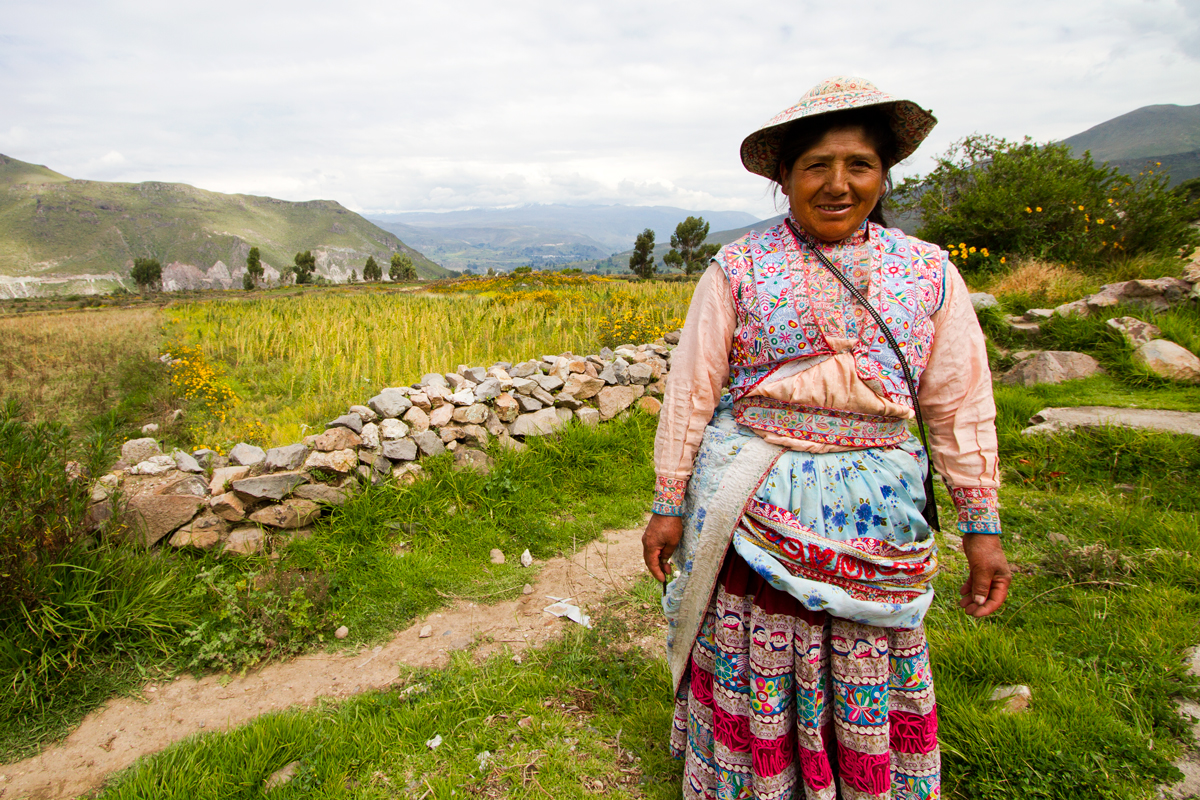
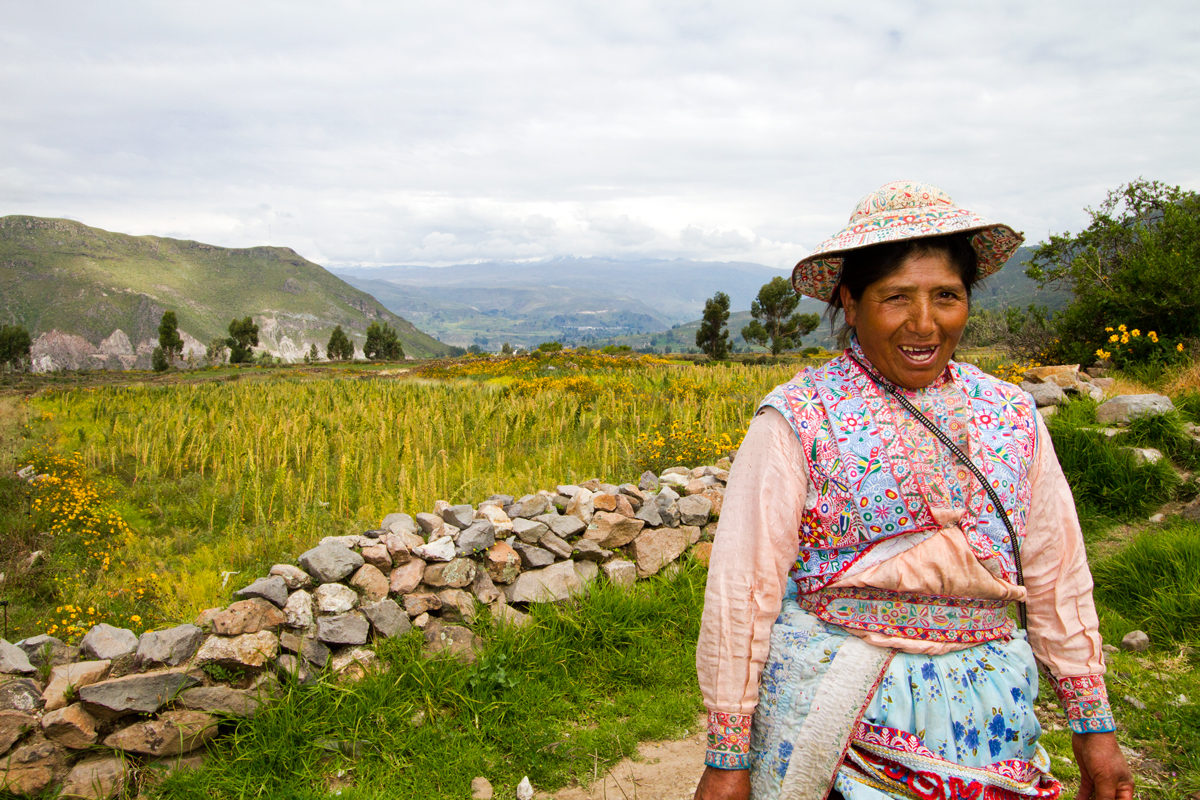
I caught Teresa at a bad time.
She was struggling to open an iron sluice. Irrigation ditches surrounded her, turning her house into a peninsula jutting out from the road. I strolled off the path and hopped over a channel, introducing myself as I ducked under a clothesline.
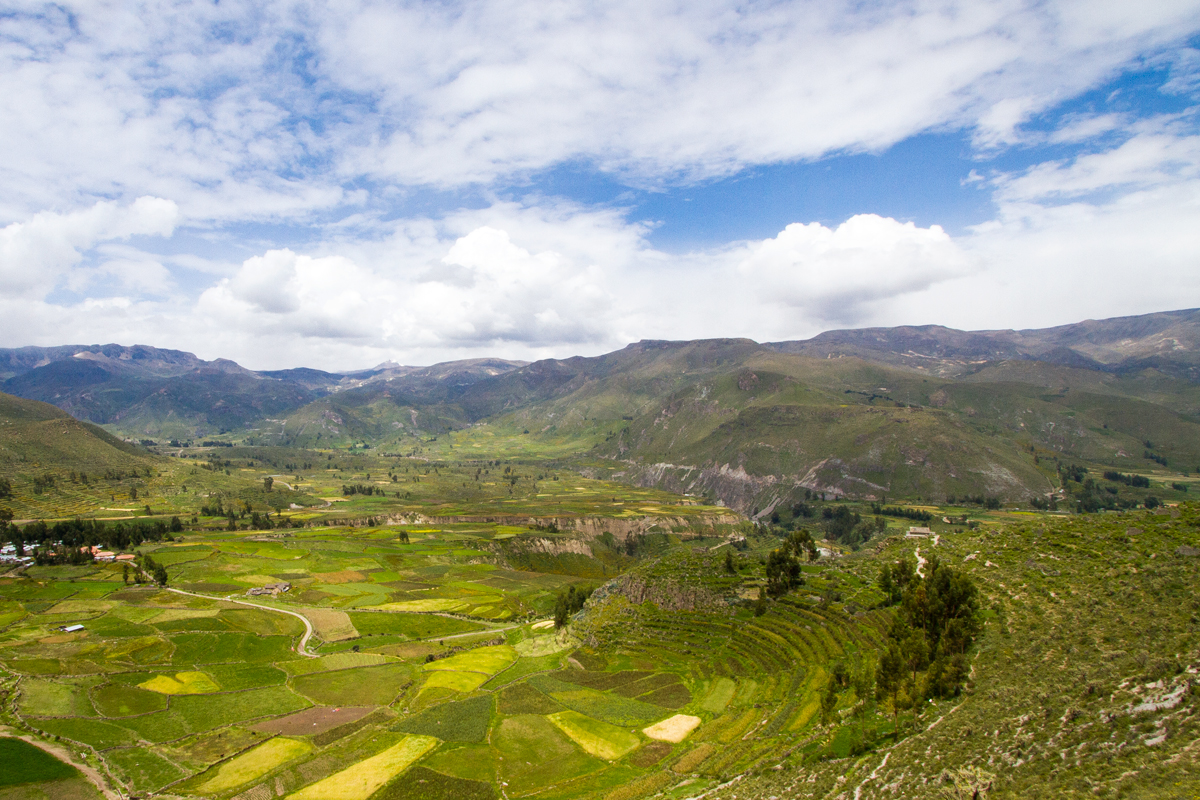
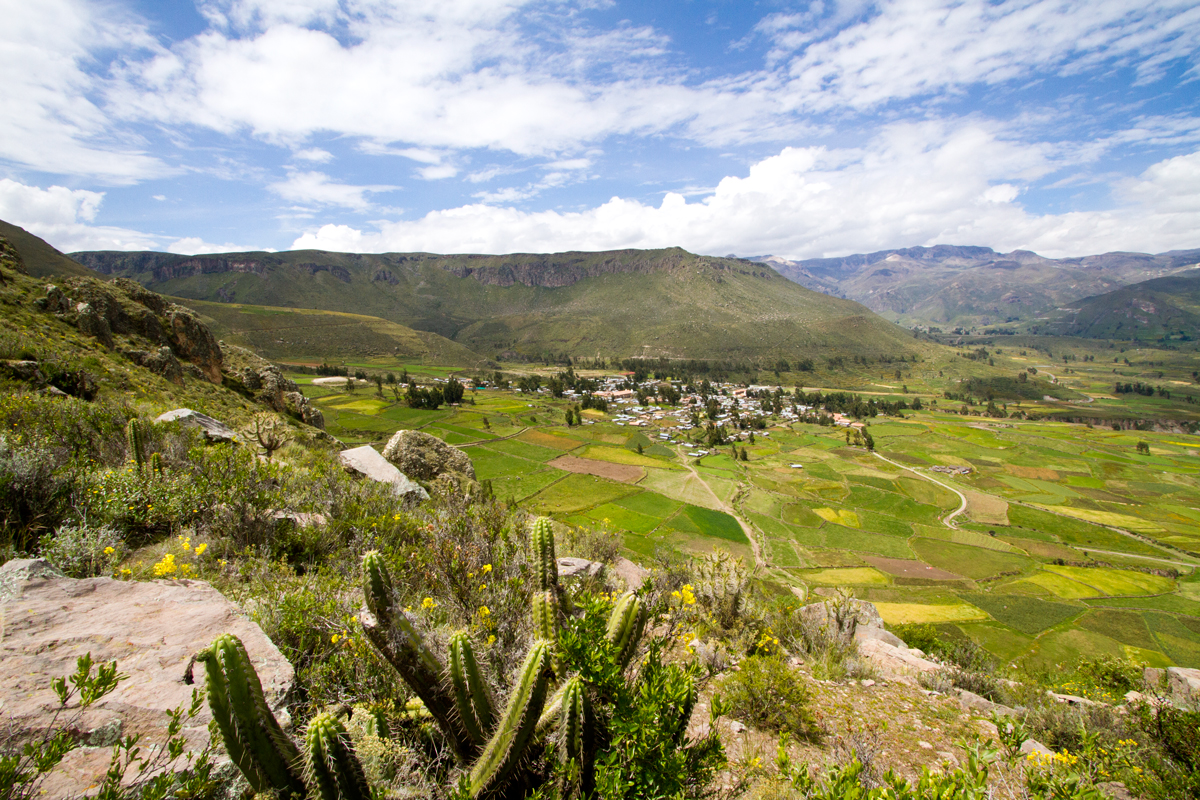
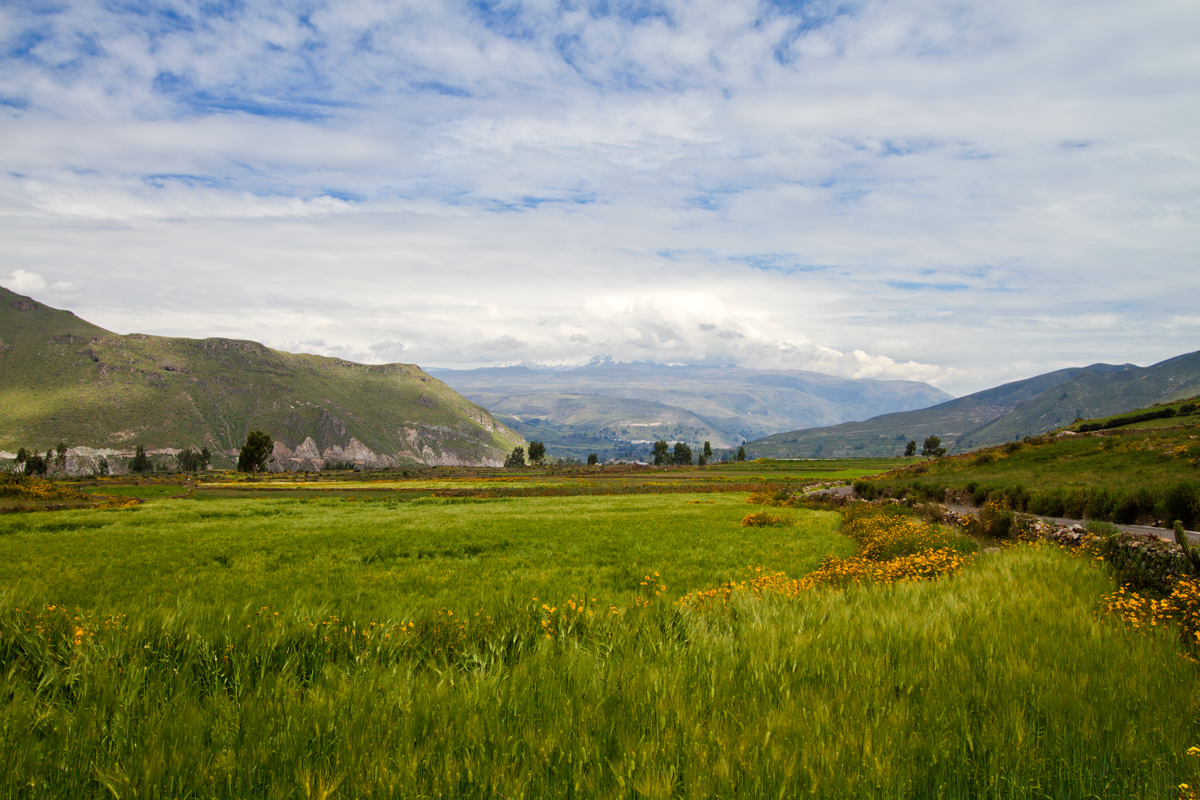
The Colca Canyon’s undulating hills are so green they made me wince; the breeze so disparate, my ears were inundated by nuance.
I’d just walked for several hours along a country road and seen far too many jagged mountain peaks, valleys of wildflowers and plentiful cropland. The place is a photography newb’s wet dream—close a shutter and develop a masterpiece.
The outskirts of Chivay are so beautiful, they’re almost disagreeable. I wanted the order of another human voice. My eyes clung to Teresa’s outfit, begging for anything other than #00ff00.
We took turns. Me fruitlessly tugging at metal and her, more productively, whacking the thing with a stone to try and jar it loose. After a few minutes, she stood and seamlessly transitioned into her next, more achievable, task.
Teresa and I walked and talked for a while. She was going to another house down the road to get some cheese. Along the way I asked her about different varieties of quinoa and discovered haba.
We talked about her hat, which is ornately embroidered with animals and symbols. This means she’s a descendant of the Cabanas, one of two tribes occupying the Colca Canyon. I asked her where she’d bought it. She gestured back the way I’d just come.
The brilliantly dressed woman and I parted ways at the edge of a field. She made her way through a forest of yellow flowers, and I kept pounding the pavement.